
Nazis, MySpace and Freedom
 Iraqi Al-Qeada leader Abu Mussab al-Zarqawi was killed earlier this morning, for those of you who hit this blog before heading to the real news. The actual bombing of his/compound was done by American planes, but it's interesting to note that the official announcement came from the Iraqi Prime Minister, Nouri al-Maliki, and claimed intelligence confirming his whereabouts was provided to the Iraqi security forces by Iraqi people. While I don't want to celebrate Zarqawi's death the same way he'd have celebrated mine, I think this is a positive sign that Iraq has made significant strides forward in defending it's own borders. It also shows that the people of Iraq are frustrated and sick of irrational militants like Zarqawi who are just as keen on blowing up civilians as they are their political and religious enemies. I pointed out a few months ago that this strategy would never work, and that the people of Iraq would turn on Zarqawi in the end, and now they have.
 Moving away from current events, disconnected thoughts on Nazi Germany, fundamentalist Islam in the middle east, and China have been congealing around the topic of freedom. Freedom's become a buzzword in post-9/11 America used to mobilize people for any number of political schemes, and thus runs the risk of being trivialized. I want to briefly discuss the importance of freedom, and then mention a few things we can think about to preserve it.
While I don't buy everything he's spouted, President Bush is certainly right about one thing: the fundamental difference between the American ideal of government and that of a large number of other cultures and societies can be summarized in the value we correctly place on personal freedom. The single strange parallel I can draw between failed cultures of the past and failing societies in the present is that they try to promote progress while simultaneously restricting personal freedom. Nazi Germany, the USSR and China promote or have promoted different forms of eugenics supposedly for the advancement of society, and in radical Islamic states the restrictions are religious and social more than biological. The idea is that the state is a better judge of behavior than the individual, and so the individual should be forced to comply with state sponsored programs for progress.
As technology and communication advance, however, the power of the individual to change their culture increases dramatically. The state's control ultimately fails if the masses will it - the desire for personal freedom outweighs the desire for progress. The idea that we're made to be free is rooted so deeply in the human psyche, fundamentally included in our undeniable free will, that it causes itself to be expressed over and above all other desires once restricted. If nothing else, the rise of "crowd sourcing", peer-to-peer networks, and the power of large social networking sites on the internet (MySpace, Facebook, even blogs) should prove that mobs of people inevitably form around technology, and that their whims can guide the course of culture significantly.
Germany never got the chance to learn this lesson, as their sadistic leader was defeated and destroyed before his ignorant utopia could have its heyday. The Soviet Union is a clear example of the poverty stricken destitution that arises when a lack of freedom stifles innovation. Afghanistan and Iraq have learned these lessons quickly, entering the western world dancing on the graves of their former dictators. China has made huge strides towards freedom, and if this trend continues, their regime might be able to disappear quietly and productively instead of suffering the inevitable implosion that will occur if it does not.
In America, our unique problem is not that our freedom is destroyed by government, but that we've run the risk of freely giving up our freedom. The image of happiness and consumer-driven culture leads to complacency and we become and ignorant nation of sheep. A recent Wired article says,
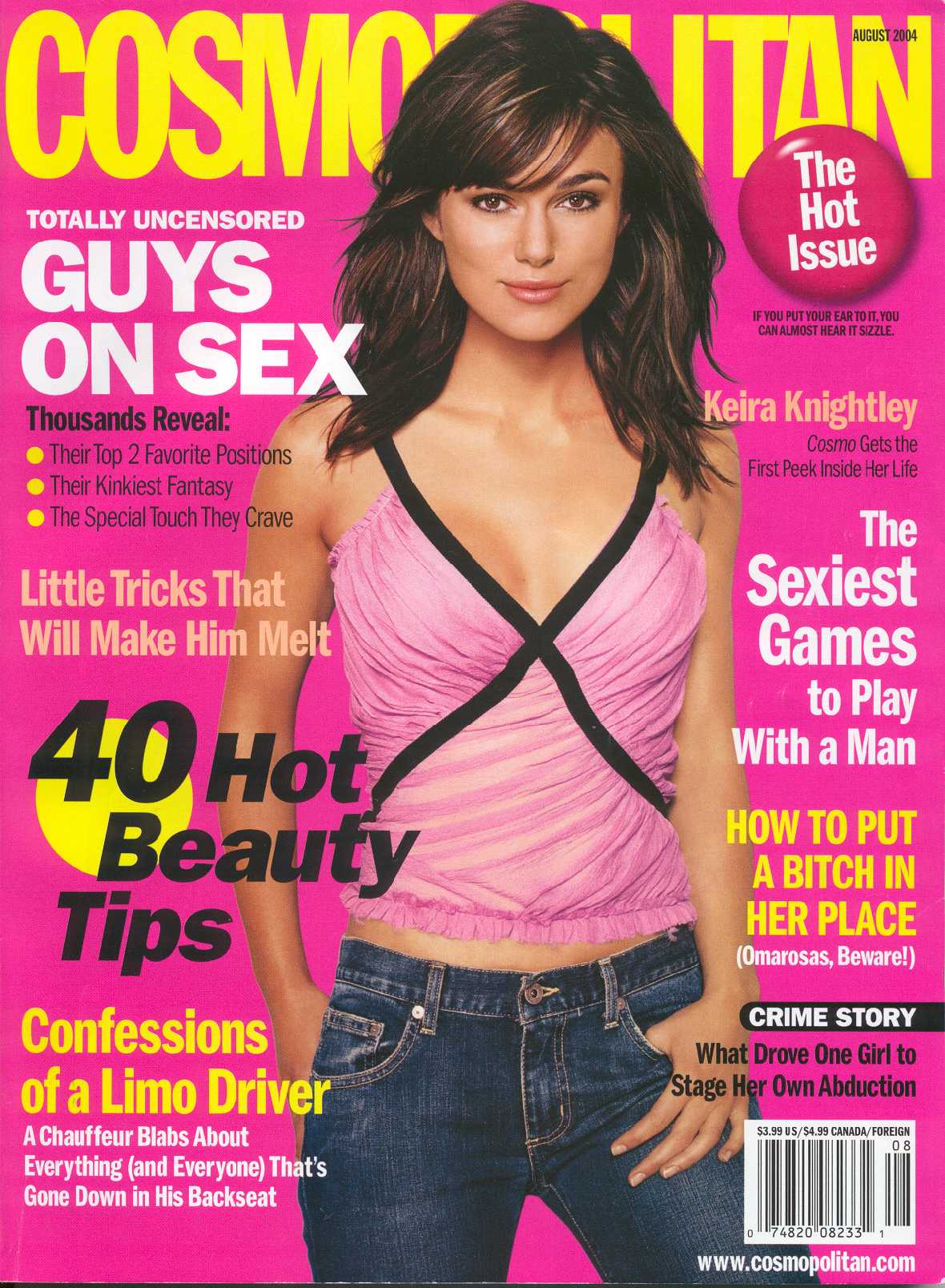
"This is a nation of sheep. Slick magazines, TV and, increasingly, the internet tell us what to buy, what to wear, how to think. (Cosmopolitan even tells you how to have an orgasm.) Mass culture has extracted our collective rebel bone. If only the British had marketed themselves better in 1776, we'd still be swearing fealty to the Crown."
It goes on to offer several small steps we as individuals can do to preserve freedom, including continuing to read, expanding our attention spans, and voting. I'd also acts of service, because restrictions on freedom often begin when governments are asked to legislate solutions to problems that wouldn't exist if individuals considered it their civic duty love their neighbors.
In conclusion, I'd post more pictures if it didn't take half an hour to get these two up. Sorry this is so long.
posted by RJ @ 8:52 AM
10 comments


10 Comments:
I agree to an extent and I also disagree. I agree that people become more and more swayed by the media and opinions of a single person, but at the same time the media is so much more prevalent than in say 1776. Also, I feel that there are a lot more ideas and opinions than earlier in society. There are more movements and activist groups than ever before and I think the sway of people partially reflects the fact that people don't have time to sift through all of the different views. They just want to have an opinion and move on without having to devote hours to study. Also, I don't necessarily agree that the number of trite magazines sold determines the general intelligence or awareness of the public. There are plenty of very well educated and opinionated people who probably read Cosmo or Men's Health. I do agree, though, that society is becoming more and more self-centered and as a detriment we are alienating ourselves from ourself. This could then lead to even more views and social factions. But, I think at the heart of everyone in the US there is a strong desire for freedom even if we don't use it. People want options. So if they want to go with the flow of mainstream media they can but they want an "out" as well.
Thanks for weighing in. I think you've got a good point in that our media and our political spectrum is wider and more cluttered today than it has been in the past, and this makes it harder for people to hold "well formed" opinions -- there's just too many issues, too many viewpoints, and too much news to digest. I also agree that the number of "trite" magazines around doesn't say much about the average intelligence, but I think it DOES say something about their awareness. Our economic structure, capitalism, being based on selling things people want and constantly keeping tabs on the pulse of the culture, makes the things we buy a good description of the things we spend our time doing and thinking about. So I agree with you that Cosmo isn't going to destroy the country, but I also find it a little disturbing that our population chooses to support so many content-less forms of entertainment.
Redhurt, good post on the value and determinative role of freedom in American society - I think you are right on. I also appreciated your comment about Germany being destoryed before it really had a chance to make national socialism work. I mean, how knows?
As far as comment, I think reading Cosmo probably will destroy our culture, regardless of "very well educated" people reading it. I think a good definition of "very well educated" would include a statement like: "doesn't read Cosmo or Men's Health". Any sense to that? I might be wrong, I have never read either, so I am speaking out of my league. While at the same time something tells me they are stupid. Okay. Cheers to almost being back in America!
I'm not going to attempt to defend Cosmo or Maxim or the like- but I'll say Men's Health is a totally acceptable magazine. It isn't literature, or opinion, or anything erudite, it's something you pick up if you want to figure out how to shave your chest without getting ingrown hairs, mix up your tricep workout, or make healthier nachos. You can't trash a cookbook because it doesn't compare to Dostoevsky.
redhurt, I think I'm with you on this one--I think. Mostly. But when you say
'Our media and our political spectrum is wider and more cluttered today than it has been in the past, and this makes it harder for people to hold "well formed" opinions--there're just too many issues, too many viewpoints, and too much news to digest.'
I think I agree with the first half but not the second. There are more interest groups, more lobbies, more coalitions, and more trite magazines than ever before. Absolutely. But does this translate into our citizenry being less informed now than in 1968, or 1945, or 1776? I wouldn't really know, but I'd say probably not. I think I know more about the Iraq war than Johnny Citizen did about Vietnam. Everyone loves the shock statistics about how no one can find Iraq on a map--but what American high schoolers could find Vietnam in 1965, or even Grenada in 1983?
I'm sorry, I know I always do this, but I just can't see the connection between
"I wish more people read the Wall Street Journal than Cosmo"
and
"Today's citizenry is less well informed than in the past."
The second claim might even be true--it just needs backup. As someone who has rejoiced in the chaos of the conservative blogosphere, aren't today's citizens MORE well-informed than ever before?
I think what I mean, Charles, is that it's harder to communicate well formed opinions on issues because of all the clutter involved in finding information today. For instance, if I search for "Iraq war" on the internet, I'm going to find worthwhile articles, as well as a slough of clutter like superficial arguments in Time, a few good and many bad articles in the NYT, and a lot of political posturing from both parties, all of which has very little to do with forming an opinion on the war. I think now adays we form opinions AROUND topics rather than ABOUT them more often than not. I don't know if this is any different from before - I'm just sympathizing with GMack's justification for not being a well informed intellectual himself, and instead writing about all of the women's clothing he likes to wear.
When I say "nowadays", it implies to you, Chuck, that I'm saying things were better before. What I really mean is that things MIGHT have been different before, but I don't really know, so all i can speak to is 'the now' I'm qualified to address by experience. I say it to avoid making generalizations that includet the past, rather than the comparison you're reading into it.
Well, good! I accept your explanation and agree.
Dude, you have to read Keith and Andrew's blog...I have a link to it on my page. It is so funny.
you're a bastard. They told me not to tell you...but the secrets out...if you can even really say it was a secret.
Hey- get off your fat ass and post something new. It's been a week and I'm bored at work.
Post a Comment
<< Home